Barzakh: Star Gardener and the Unseen Thresholds of an Interactive Parable
A long essay on Barzakh: Star Gardener through Dede Korkut, The Little Prince, Dante, Charon, symbolic thresholds and interactive narrative.
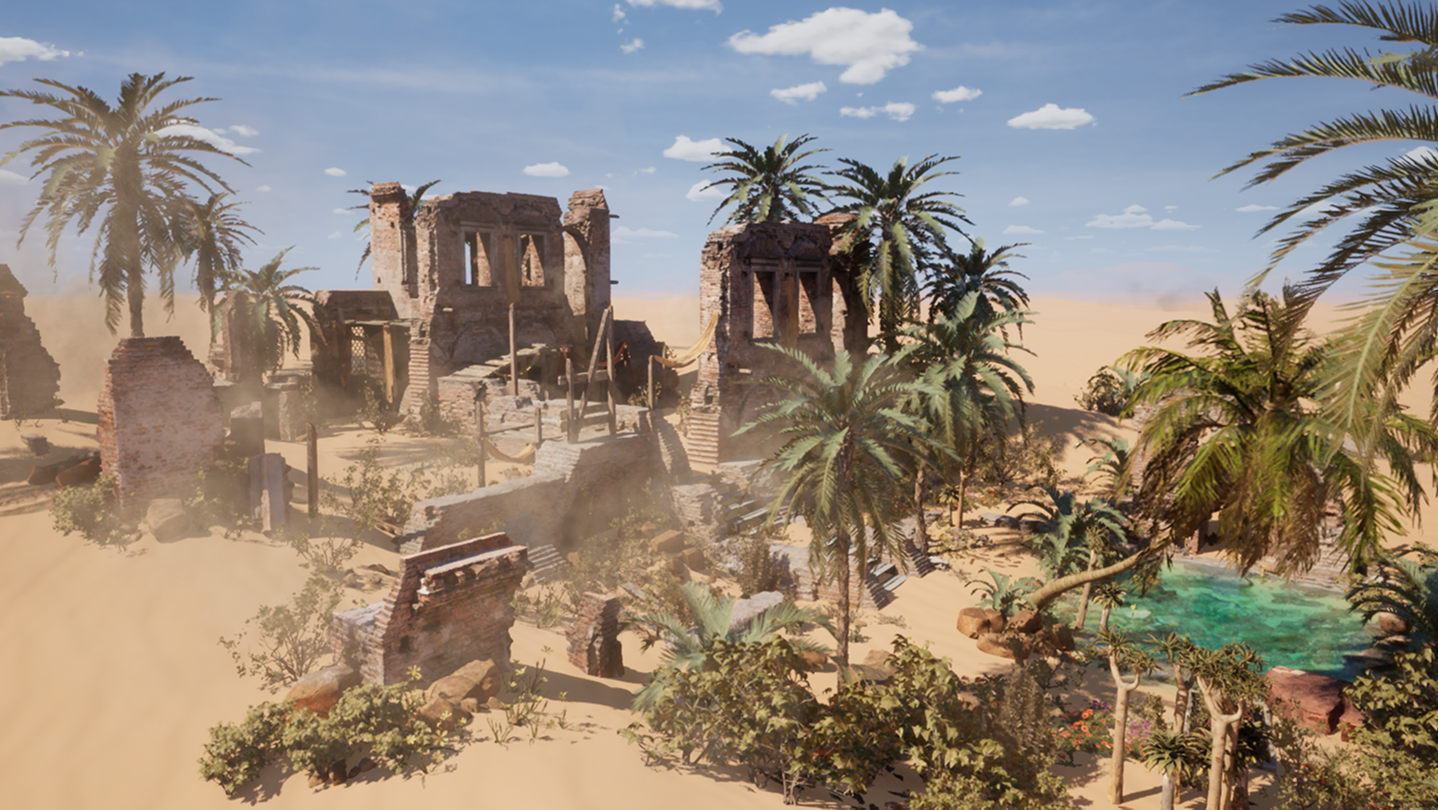
When Dede Korkut told children stories, he was in fact teaching them the world. To the son of Oghuz he gave not only courage, but a name, destiny, patience and an end. A tale was never merely entertainment; it was a way for a person to recognise the self, one’s place, and one’s burden. Today, however, the tale is too often treated as a slight genre, and the story as a commodity to be consumed and forgotten.
That is precisely why, amid this age’s poverty of narrative, some works deserve our close attention.
Barzakh: Star Gardener first presents itself as a video game, yet soon exceeds that description. Calling it a game is technically accurate, perhaps; but it is not merely something played. It is a state to be experienced.
The roots of this narrative reach back to The Little Prince, one of modern literature’s most delicate and profound works. Just as that story begins with a pilot falling into the desert and becomes a journey of understanding between worlds, Barzakh begins when a person lost in the desert comes face to face with his own being. Here, however, the places visited are not planets but the times and places where lost stars have been forgotten.
After becoming lost in the desert, the protagonist encounters Charon, familiar from Dante Alighieri’s Divine Comedy. Yet this Charon is not the neutral keeper of a passage found in classical mythology; here he is an infernal boatman in the service of the Dajjal. From its earliest stage, the encounter whispers the work’s premise: this is not a story of salvation, but of reckoning.
The protagonist is now lost. Yet being lost does not always mean being erased. God separates him from the outer world, leads him on a spiritual journey, and confronts him with himself in the desert. Afterwards, he is tasked with finding the universe’s missing stars. Finding them is not enough: each must be planted and buried in the garden of the protagonist’s mind.
At this point the game crosses a surreal threshold. The protagonist is no longer a traveller but a gardener of stars. The stars are not returned to the sky; they are made to grow through understanding.
This approach separates Barzakh from much of modern game storytelling. Progress, power and victory are not its primary aims. Progress is measured by understanding.
This philosophical position is also clear in the interview with the game’s director and developer, Emirhan Gungormez, in WDR’s Lebenszeichen episode, “Pixel voller Vorurteile? Wie Games den Islam zeichnen”. Gungormez frames games as the shared dreams of the modern age and, with reference to Immanuel Kant’s ethics of duty, argues that they carry a cultural responsibility. He treats Barzakh as an effort to turn Islamic culture and philosophy into an experience legible to modern digital society.
Another striking aspect is the question of identity. Addressing the search of younger generations who inherit a layered history and find themselves between Europe and Asia, Gungormez points to the synthesis Turkish culture has formed with Islam over centuries. At the centre of this synthesis he places the ideal of Kızılelma within Barzakh’s narrative spine: a journey whose final horizon is justice and goodness.
Perhaps the game’s most distinctive quality appears here. In the games industry, religious themes are commonly treated through horror, heretical cults or God’s absence. Barzakh instead approaches the divine as hope, consolation and the possibility of salvation. It does so not loudly, but in a quiet and dignified voice.
Barzakh: Star Gardener remains in development. Perhaps every note made and every reflection offered in this essay can help it move toward a truer form. Barzakh is not an entertainment product designed to occupy children; woven from Sufi thresholds, it is an act of endeavour that calls the player to seek truth.
The tale is still possible. And perhaps it is time to take the tale seriously again.